Overview of Network Identification by Deconvolution
Introduction
When a device suddenly receives constant extra heating or cooling power (a power step), its temperature does not jump immediately. Instead it follows a characteristic curve that reveals the device’s thermal properties. Network identification by deconvolution (NID) reconstructs those properties from the measured curve and expresses them as an equivalent electric RC network (thermal resistance ↔ electrical resistance, thermal capacity ↔ electrical capacitance).
The main ideas are sketched below.
Step- and impulse-response
Step response The thermal impedance
(1)\[Z_\mathrm{th}(t) = \frac{T_0 - T(t)}{P}\]is the temperature rise (relative to the starting temperature \(T_0\)) normalised by the applied power step \(P\).
Impulse response Differentiate the step response:
(2)\[h(t) \;=\; \frac{\partial Z_\mathrm{th}(t)}{\partial t} .\]Once \(h(t)\) is known, any time-dependent power profile \(P(t)\) produces
(3)\[T(t) = T_0 + \int_0^{t} P(t')\,h(t - t')\,\mathrm{d}\t'\]via convolution.
Note
Differentiation is numerically challenging due to the amplification of measurement noise. See Differentiation for details on specialized algorithms that overcome these challenges.
Transfer function The Laplace transform \(Z(s)\) of \(h(t)\) is the impedance of the sought RC network. Knowing \(Z(s)\) numerically is not enough: the individual resistances and capacitances still have to be extracted.
Logarithmic time axis
Thermal transients span microseconds to hours. Calculations therefore switch to a logarithmic time axis
usually with \(t_0=\tau_0=1\;\text{s}\) so that \(z\) and \(\zeta\) are logarithmic times.
Notation: The measured step response expressed on the \(z\)-axis is written
(5)\[a(z) \;=\; Z_\mathrm{th}\!\bigl(e^{z}\bigr).\]
Time-constant spectrum
A one-dimensional heat path can be modelled by a Foster ladder with time-constants \(\tau_i = R_i C_i\). Its logarithmic time-constant spectrum
collects the resistances as Dirac peaks.
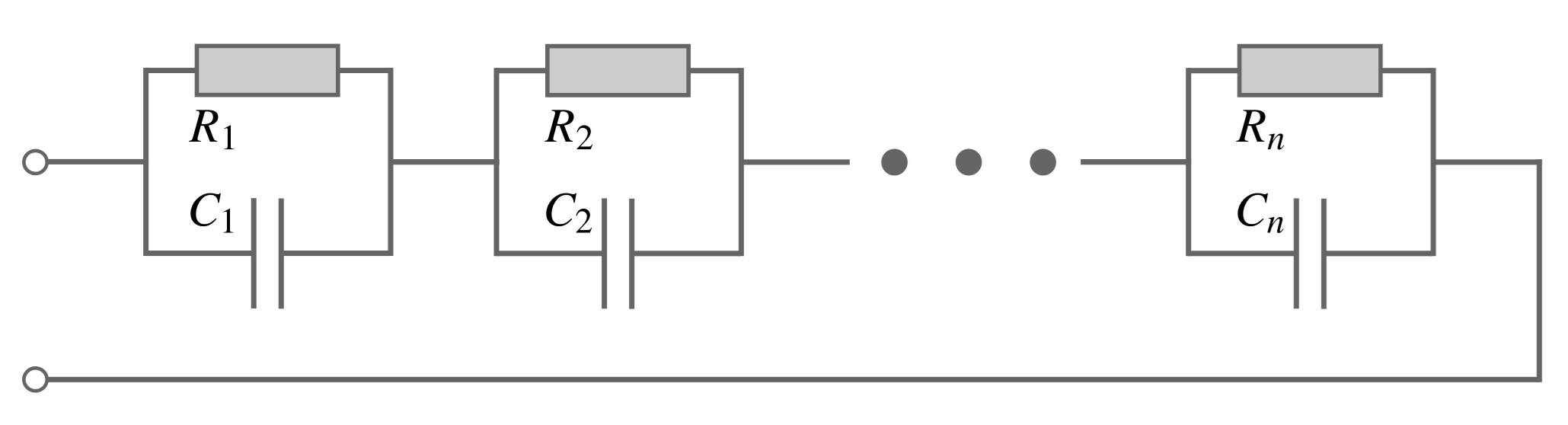
Fig. 1 Foster network with parallel RC branches.
On the logarithmic axis the step response becomes
Differentiation yields the impulse response
with the kernel
Finding \(R(\zeta)\) is therefore a deconvolution problem.
From spectrum to RC network
Discretise the spectrum into bins of width \(\Delta\zeta_i\) centred at \(\zeta_i\).
Foster elements
(10)\[\begin{split}R_i &= R(\zeta_i)\,\Delta\zeta_i,\\ C_i &= \frac{e^{\,\zeta_i}}{R(\zeta_i)\,\Delta\zeta_i}.\end{split}\]Cauer network Transform the Foster ladder to a Cauer (series) ladder iteratively (see standard Foster-↔-Cauer formulas). The cumulative heat capacitance versus cumulative thermal resistance obtained from the Cauer ladder is the structure function.
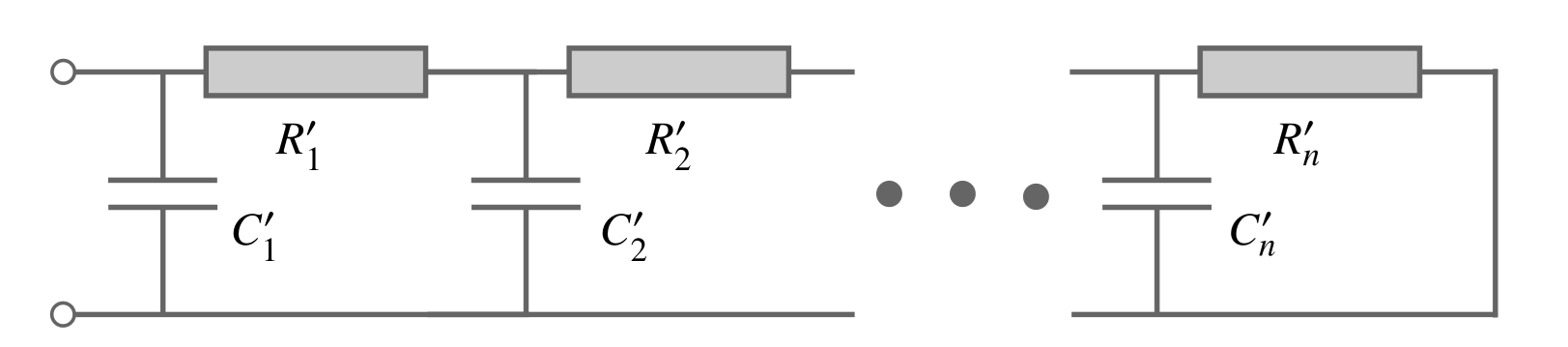
Fig. 2 Foster network with series RC branches.
Inverse route starting from \(Z(s)\)
If only the transfer function is given, the spectrum follows from
Here, \(\Im\!\bigl[Z(s)\bigr]\) is the imaginary part of the transfer function.
Because \(Z(s)\) has poles on the negative real axis, evaluate instead along a line tilted by a small angle \(\delta\)
which broadens the delta peaks and avoids singularities.
With \(R(\zeta)\) known, use the convolution above to recreate \(h(z)\) and \(Z_\mathrm{th}(t)\).
Thermal Structure Functions
The structure function is a strictly one-dimensional representation. Whenever lateral or parasitic heat flows grow significant, assigning its resistances and capacitances to real device layers becomes ambiguous. Typical causes are:
asymmetric cooling conditions,
strong neighbouring heat sources,
inadequate insulation,
three-dimensional spreading (cylindrical, conical, spherical).
Even then the spectrum, impulse response and thermal impedance remain well defined, because the Foster elements are mathematical and need not match physical layers.